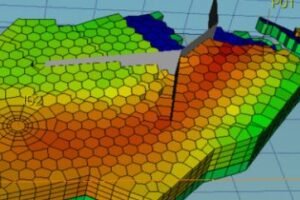
Unlocking Subsurface Secrets: The Power of Pressure Transient Analysis (PTA)
In the dynamic world of oil and gas, understanding the intricate behavior of subsurface reservoirs is paramount for optimizing production and maximizing recovery. Among the most powerful diagnostic tools available to reservoir engineers is Pressure Transient Analysis (PTA). This sophisticated technique involves analyzing the pressure response of a well to controlled changes in flow rate, providing invaluable insights into reservoir characteristics and well performance.
What is Pressure Transient Analysis (PTA)?
Pressure Transient Analysis (PTA) is essentially a diagnostic method that interprets pressure changes over time within a wellbore and reservoir system. By carefully monitoring how pressure responds to events like well shut-ins (buildup tests) or constant production (drawdown tests), engineers can deduce critical information about the reservoir’s properties and the well’s interaction with it .
Key Objectives of Pressure Transient Analysis:
PTA serves several critical objectives in reservoir engineering. Firstly, it enables reservoir characterization by estimating fundamental parameters such as permeability, which dictates fluid flow capacity, and skin factor, an indicator of near-wellbore damage or stimulation . This also helps in determining initial reservoir pressure. Secondly, PTA facilitates well performance evaluation, offering insights into wellbore storage effects and the overall productivity index of a well, crucial for understanding its efficiency. Thirdly, it aids in boundary identification, helping to detect reservoir boundaries, the presence of faults, or changes in reservoir geometry, which are vital for accurate volumetric calculations and field development planning. Lastly, through interference and pulse tests, PTA can assess inter-well communication, offering a clearer picture of reservoir compartmentalization and fluid movement .
The Value Proposition: Why Pressure Transient Analysis Matters
The insights gained from Pressure Transient Analysis are critical for informed decision-making throughout the lifecycle of an oil and gas asset. Its applications extend beyond mere diagnostics, contributing significantly to strategic reservoir management and operational efficiency.
PTA helps achieve optimized production by accurately characterizing the reservoir and well, thus aiding in the design of optimal production strategies, including artificial lift selection and perforation design. It also contributes to enhanced recovery; understanding reservoir connectivity and properties allows for better planning of enhanced oil recovery (EOR) projects and infill drilling campaigns. Furthermore, the skin factor derived from PTA is a direct measure of wellbore impairment or enhancement, guiding stimulation design decisions on whether and how to stimulate a well (e.g., hydraulic fracturing). In emerging fields like Carbon Capture, Utilization, and Storage (CCUS), PTA plays a vital role in monitoring the injectivity and containment of CO2 in storage reservoirs, ensuring long-term integrity and safety .

Interpretation Methods: Unveiling the Data with PTA
Interpreting Pressure Transient Analysis data involves several sophisticated techniques, each offering a unique perspective on the subsurface :
•Straight-line Analysis: Traditional methods like Horner plots for buildup tests provide quick estimates of reservoir parameters.
•Log-Log Diagnostic Plots: These plots, particularly those incorporating the pressure derivative (Bourdet derivative), are instrumental in identifying various flow regimes (e.g., wellbore storage, radial flow, linear flow), which are characteristic of different reservoir and wellbore conditions.
•Type-Curve Matching: This involves comparing observed pressure data with theoretical type curves generated from idealized reservoir models to find the best fit and extract parameters.
•Analytical and Numerical Modeling: For more complex reservoir systems, such as multi-fractured horizontal wells, advanced analytical and numerical models are employed to simulate and match the observed pressure behavior.
Conclusion
Pressure Transient Analysis (PTA) remains an indispensable tool in the reservoir engineer’s arsenal. Its ability to provide detailed, quantitative insights into the subsurface environment empowers companies to make data-driven decisions, optimize production, and ensure the sustainable management of valuable hydrocarbon and storage assets. As the industry evolves, the role of PTA continues to expand, solidifying its position as a cornerstone of modern reservoir engineering.
References
[1] Whitson, C. H. (n.d.). PTA – Pressure Transient Analysis. Whitson+ User Manual. Available at:
[2] SPE. (2013, June 10). The Role of Pressure Transient Analysis in CCUS Projects. Available at: