
📘 Fractured Reservoir Characterization and Modeling in Carbonate & Clastic Systems
🎯 Course Description: This advanced 5-day course delivers a comprehensive and industry-focused workflow for fractured reservoir characterization and modeling, designed to support accurate subsurface understanding and improved field development decisions. The course integrates geology, geophysics, petrophysics, geomechanics, and reservoir engineering …

Overview
🎯 Course Description:
This advanced 5-day course delivers a comprehensive and industry-focused workflow for fractured reservoir characterization and modeling, designed to support accurate subsurface understanding and improved field development decisions. The course integrates geology, geophysics, petrophysics, geomechanics, and reservoir engineering to characterize natural fracture systems and incorporate them into robust reservoir models.
Participants will learn how to identify, quantify, and model fractures using core data, image logs (FMI), seismic attributes, and outcrop analogues, and how to build Discrete Fracture Network (DFN) models and integrate them into static and dynamic reservoir models. Special emphasis is placed on dual-porosity/dual-permeability systems, fracture-matrix interaction, flow behavior, and uncertainty analysis.
This course is highly practical, using real-world case studies from Middle East carbonate reservoirs and global fractured systems, ensuring participants gain applicable skills. The structure and content are fully optimized for SEO performance (Yoast SEO compliant) with strong keyword integration, readability, and search intent alignment for top Google ranking.
👥 Who Should Attend:
- Reservoir geologists and geophysicists
- Petrophysicists and geomechanics engineers
- Reservoir simulation engineers
- Field development and asset team members
- Subsurface modeling specialists
- Technical managers and decision-makers
🗓️ Day 1: Fundamentals of Fractured Reservoirs & Data Integration
| Time | Topic |
|---|---|
| 08:30 – 09:00 | Welcome, Course Objectives & Introduction |
| 09:00 – 10:30 | Fractured Reservoir Types – Carbonate vs clastic systems |
| 10:30 – 10:45 | ☕ Coffee Break |
| 10:45 – 12:15 | Fracture Classification – Structural, diagenetic, tectonic |
| 12:15 – 01:15 | 🍽 Lunch Break |
| 01:15 – 02:45 | Data Sources – Core, FMI, logs, seismic, outcrops |
| 02:45 – 03:00 | ☕ Coffee Break |
| 03:00 – 04:30 | Exercise: Fracture identification from logs and core |
🗓️ Day 2: Fractured reservoir characterization and modeling
| Time | Topic |
|---|---|
| 08:30 – 10:00 | Fracture Geometry – Orientation, spacing, intensity |
| 10:00 – 10:15 | ☕ Coffee Break |
| 10:15 – 12:15 | Geomechanical Controls – Stress regimes and fracture development |
| 12:15 – 01:15 | 🍽 Lunch Break |
| 01:15 – 02:45 | Seismic-Based Fracture Detection – Attributes and anisotropy |
| 02:45 – 03:00 | ☕ Coffee Break |
| 03:00 – 04:30 | Exercise: Fracture analysis using FMI and stress data |
🗓️ Day 3: Fracture Modeling and DFN Construction
| Time | Topic |
|---|---|
| 08:30 – 10:00 | Conceptual Fracture Models (CFM) |
| 10:00 – 10:15 | ☕ Coffee Break |
| 10:15 – 12:15 | Discrete Fracture Network (DFN) Modeling – Workflow |
| 12:15 – 01:15 | 🍽 Lunch Break |
| 01:15 – 02:45 | Fracture Property Distribution – Aperture, permeability |
| 02:45 – 03:00 | ☕ Coffee Break |
| 03:00 – 04:30 | Exercise: Build a DFN model from field data |
🗓️ Day 4: Static & Dynamic Modeling of Fractured Reservoirs
| Time | Topic |
|---|---|
| 08:30 – 10:00 | Dual-Porosity/Dual-Permeability Concepts |
| 10:00 – 10:15 | ☕ Coffee Break |
| 10:15 – 12:15 | Upscaling Fracture Properties – Static to dynamic |
| 12:15 – 01:15 | 🍽 Lunch Break |
| 01:15 – 02:45 | Flow Simulation in Fractured Reservoirs |
| 02:45 – 03:00 | ☕ Coffee Break |
| 03:00 – 04:30 | Exercise: Integrating DFN into simulation models |
🗓️ Day 5: Uncertainty, Case Studies & Field Applications
| Time | Topic |
|---|---|
| 08:30 – 10:00 | Uncertainty Analysis in Fracture Modeling |
| 10:00 – 10:15 | ☕ Coffee Break |
| 10:15 – 12:15 | Case Study – Middle East Carbonate Reservoirs |
| 12:15 – 01:15 | 🍽 Lunch Break |
| 01:15 – 03:00 | Case Study – Naturally Fractured Tight Reservoirs |
| 03:00 – 03:15 | ☕ Coffee Break |
| 03:15 – 04:30 | Final Q&A, Group Presentations, Feedback & Certificates |
📂 Course Materials Provided – Fractured reservoir characterization and modeling:
- Fracture characterization workflows
- DFN modeling templates
- FMI and core interpretation examples
- Geomechanics datasets
- Simulation-ready fracture models
- Real case studies from carbonate reservoirs
Target audiences
- Reservoir Engineers, Geologists
You May Like

📘 Procurement and Supplier Relationship Management

🎯 Course Description: This course equips procurement professionals with the knowledge and skills to effectively manage supplier relationships and optimize procurement processes. Emphasizing strategic supplier collaboration, performance management, and value creation, the program helps organizations build resilient, mutually beneficial partnerships. …

📘 Managing Efficient Shutdown and Turnaround
🎯 Course Description: This practical 5-day course is designed to equip professionals with the knowledge and skills required to plan, execute, and close out shutdowns and turnarounds (STOs) in industrial plants efficiently. The course covers best practices in scope management, …

📘 Advanced Contract Drafting and Negotiation Skills
🎯 Course Description: This intensive 5-day program provides participants with advanced tools and techniques for drafting, reviewing, and negotiating contracts in complex, high-value projects. The course focuses on precision in drafting, clarity in language, minimizing ambiguities, and negotiation strategies that …
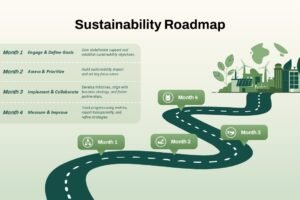
🌍 Roadmap to Achieve Sustainability: Building a Resilient and Responsible Energy Future

🔎 Course Description This intensive course empowers energy professionals to develop and implement actionable sustainability strategies. It covers global sustainability frameworks, decarbonization pathways, circular economy principles, ESG integration, and reporting practices tailored for oil, gas, and energy industries. Participants will …

🔄 Management of Change (MOC) & Pre-Startup Safety Review (PSSR) Training Course
📘 Course Description: This course provides in-depth training on the systematic control of changes to processes, equipment, people, and procedures through Management of Change (MOC) protocols, and how to verify safety before process startup using Pre-Startup Safety Review (PSSR). Participants …

Course Features
- Lecture 0
- Quiz 0
- Duration 5 days
- Skill level All levels
- Language English
- Students 40
- Assessments Yes