
🎯 Course Description:
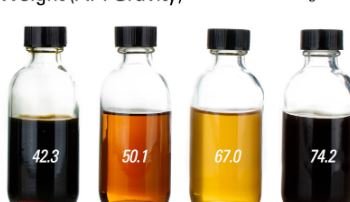
This 5-day advanced course provides an in-depth understanding of how crude oils are classified, characterized, and evaluated for commercial, refining, and transportation purposes. The course covers physical and chemical property analysis, global crude benchmarks, and classification based on API gravity, sulfur content, wax/asphaltene content, and more.
Participants will explore laboratory testing techniques, international classification systems (light/sweet, heavy/sour), and how these affect pricing, refining strategies, and blending decisions. Real-world case studies from upstream, trading, and refining sectors help attendees gain actionable skills in crude assay interpretation, compatibility evaluation, and quality forecasting.
👥 Who Should Attend:
-
Petroleum lab analysts and crude quality technicians
-
Refinery planners and crude traders
-
Upstream production and reservoir engineers
-
QA/QC professionals in terminals and tank farms
-
Technical staff in crude marketing, blending, or logistics
🗓️ Day 1: Introduction to Crude Oil Classification
| Time | Topic |
|---|---|
| 08:30 – 09:00 | Welcome, Course Objectives & Introductions |
| 09:00 – 10:30 | What Is Crude Oil? – Composition, origin, variability |
| 10:30 – 10:45 | ☕ Coffee Break |
| 10:45 – 12:15 | Global Crude Oil Classification Systems – Light/Heavy, Sweet/Sour, Paraffinic/Naphthenic |
| 12:15 – 01:15 | 🍽 Lunch Break |
| 01:15 – 02:45 | Key Parameters – API gravity, sulfur, TAN, metals, wax, asphaltenes |
| 02:45 – 03:00 | ☕ Coffee Break |
| 03:00 – 04:30 | Case Study: Comparing Brent, WTI, Dubai, and Basrah crude types |
🗓️ Day 2: Physical Property Testing for Classification
| Time | Topic |
|---|---|
| 08:30 – 10:00 | API Gravity and Density Testing – ASTM D287, D1298, and D4052 |
| 10:00 – 10:15 | ☕ Coffee Break |
| 10:15 – 12:15 | Viscosity Measurement – Saybolt, kinematic and dynamic methods |
| 12:15 – 01:15 | 🍽 Lunch Break |
| 01:15 – 02:45 | Pour Point and Wax Content Analysis – Cold flow behavior and paraffin content |
| 02:45 – 03:00 | ☕ Coffee Break |
| 03:00 – 04:30 | Workshop: Physical property testing data interpretation |
🗓️ Day 3: Chemical Characterization of Crude Oil
| Time | Topic |
|---|---|
| 08:30 – 10:00 | Sulfur Content and Sweet/Sour Classification – ASTM D4294, D2622 |
| 10:00 – 10:15 | ☕ Coffee Break |
| 10:15 – 12:15 | Acid Number and Corrosivity (TAN) – ASTM D664 and corrosion implications |
| 12:15 – 01:15 | 🍽 Lunch Break |
| 01:15 – 02:45 | Asphaltenes, Resins, and Stability – Precipitation techniques, ASTM D6560 |
| 02:45 – 03:00 | ☕ Coffee Break |
| 03:00 – 04:30 | Trace Metals & Salts – Nickel, vanadium, sodium, and desalting needs |
🗓️ Day 4: Crude Assays, Distillation, and Yield Patterns
| Time | Topic |
|---|---|
| 08:30 – 10:00 | Crude Assay Interpretation – TBP, ASTM, and SimDist results and usage |
| 10:00 – 10:15 | ☕ Coffee Break |
| 10:15 – 12:15 | Distillation Curves and Product Yields – Light ends to residue fractions |
| 12:15 – 01:15 | 🍽 Lunch Break |
| 01:15 – 02:45 | Refinery Suitability of Crudes – Naphthenic vs paraffinic feedstocks |
| 02:45 – 03:00 | ☕ Coffee Break |
| 03:00 – 04:30 | Workshop: Selecting the right crude for different refinery configurations |
🗓️ Day 5: Pricing, Compatibility, and Blending Considerations
| Time | Topic |
|---|---|
| 08:30 – 10:00 | Crude Pricing and Benchmarks – Brent, WTI, OPEC Reference Basket |
| 10:00 – 10:15 | ☕ Coffee Break |
| 10:15 – 12:15 | Crude Compatibility Issues – Mixing rules, sludge formation, stability testing |
| 12:15 – 01:15 | 🍽 Lunch Break |
| 01:15 – 03:00 | Crude Oil Blending – On-spec blending, optimization tools |
| 03:00 – 03:15 | ☕ Coffee Break |
| 03:15 – 04:30 | Final Q&A, Group Presentations, Feedback & Certificate Distribution |
📂 Course Materials Provided:
-
Crude Classification Handbook (ASTM/API/ISO references)
-
Assay and Yield Calculation Templates
-
Crude Oil Blending and Compatibility Checklist
-
Case Studies: Heavy/Sour vs Light/Sweet Market Decisions
-
Test Method Quick Reference Cards (API Gravity, Sulfur, TAN, etc.)