🤖 Practical AI Fundamentals for Energy Professionals
📘 Course Description This course demystifies Artificial Intelligence (AI) for professionals working in the energy sector, bridging the gap between AI technology and practical oil, gas, and renewable energy applications. Participants will gain a solid foundation in machine learning, deep …
Overview
📘 Course Description
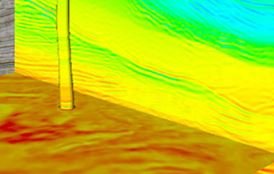
This course demystifies Artificial Intelligence (AI) for professionals working in the energy sector, bridging the gap between AI technology and practical oil, gas, and renewable energy applications. Participants will gain a solid foundation in machine learning, deep learning, and data analytics concepts, learn to identify problems that can be solved with AI, and practice applying AI workflows to real-world energy challenges such as seismic interpretation, predictive maintenance, production forecasting, and reservoir analysis.
🎯 Learning Objectives
✅ Understand key AI concepts relevant to energy applications
✅ Identify opportunities to use AI in exploration, drilling, production, and energy operations
✅ Learn basics of machine learning (ML) and deep learning (DL) techniques
✅ Build simple predictive models using structured and unstructured data
✅ Apply AI workflows to solve practical problems in energy projects
✅ Evaluate AI models for accuracy, bias, and reliability
👥 Who Should Attend
-
Geoscientists, reservoir & petroleum engineers
-
Data analysts and data managers in energy companies
-
Project managers and technical team leads
-
Energy professionals looking to integrate AI into workflows
-
Technical decision-makers exploring digital transformation strategies
🗂️ Training Format
✅ Conceptual lectures explaining AI & ML fundamentals
✅ Hands-on labs using tools like Python, Jupyter Notebooks & popular ML libraries
✅ Energy-focused exercises and case studies
✅ Group discussions on AI strategy in energy companies
✅ Daily Q&A sessions
📅 Day-by-Day Agenda with Time Breaks
📅 Day 1: Introduction to AI in Energy
| Time | Topic |
|---|---|
| 08:30 – 09:00 | Welcome, Introductions & Course Objectives |
| 09:00 – 10:30 | Overview of AI, ML, and DL: What They Are & Why They Matter |
| 10:30 – 10:45 | ☕ Coffee Break |
| 10:45 – 12:15 | Key AI Concepts: Data, Algorithms & Features |
| 12:15 – 13:15 | 🍽 Lunch |
| 13:15 – 14:45 | The Role of AI in the Energy Industry: Trends & Case Studies |
| 14:45 – 15:00 | ☕ Coffee Break |
| 15:00 – 16:30 | Workshop: Identifying AI Opportunities in Your Projects |
📅 Day 2: Fundamentals of Machine Learning
| Time | Topic |
|---|---|
| 08:30 – 10:00 | Types of ML: Supervised, Unsupervised, Reinforcement Learning |
| 10:00 – 10:15 | ☕ Coffee Break |
| 10:15 – 12:15 | Data Preparation & Feature Engineering |
| 12:15 – 13:15 | 🍽 Lunch |
| 13:15 – 14:45 | Building a Simple Regression Model in Python |
| 14:45 – 15:00 | ☕ Coffee Break |
| 15:00 – 16:30 | Workshop: Predicting Production Rates from Historical Data |
📅 Day 3: Deep Learning & Applications in Energy
| Time | Topic |
|---|---|
| 08:30 – 10:00 | Introduction to Neural Networks & Deep Learning |
| 10:00 – 10:15 | ☕ Coffee Break |
| 10:15 – 12:15 | Convolutional Neural Networks for Seismic Interpretation |
| 12:15 – 13:15 | 🍽 Lunch |
| 13:15 – 14:45 | Time Series Modeling for Predictive Maintenance |
| 14:45 – 15:00 | ☕ Coffee Break |
| 15:00 – 16:30 | Workshop: Building a Fault Detection Model with Sensor Data |
📅 Day 4: AI Workflows & Deployment
| Time | Topic |
|---|---|
| 08:30 – 10:00 | AI Project Lifecycle: From Data to Model to Deployment |
| 10:00 – 10:15 | ☕ Coffee Break |
| 10:15 – 12:15 | Evaluating Models: Metrics, Overfitting & Bias |
| 12:15 – 13:15 | 🍽 Lunch |
| 13:15 – 14:45 | Deploying AI Models: Tools & Infrastructure Basics |
| 14:45 – 15:00 | ☕ Coffee Break |
| 15:00 – 16:30 | Workshop: Deploying an AI Model for Production Forecasting |
📅 Day 5: Integrating AI into Energy Workflows
| Time | Topic |
|---|---|
| 08:30 – 10:00 | Building Data-Driven Cultures in Energy Companies |
| 10:00 – 10:15 | ☕ Coffee Break |
| 10:15 – 12:15 | Ethics, Bias, and Trust in AI Systems |
| 12:15 – 13:15 | 🍽 Lunch |
| 13:15 – 14:45 | Planning Your AI Strategy: People, Processes, Tools |
| 14:45 – 15:00 | ☕ Coffee Break |
| 15:00 – 16:30 | Final Review, Case Studies, Q&A, Wrap-Up & Certificate Distribution |
📦 Materials Provided
✅ Course manual & slides
✅ Jupyter Notebook templates & datasets for hands-on labs
✅ Cheat sheets for key Python & ML libraries
✅ Energy industry AI case study library
✅ Certificate of Completion
Target audiences
- Reservoir Engineers, Geologists
You May Like
📘 Underbalanced Drilling (UBD) Techniques and Safety
🎯 Course Description: This intensive 5-day program focuses on Underbalanced Drilling (UBD) – an advanced technique used to drill wells where the hydrostatic pressure of the fluid is intentionally kept below formation pressure. Participants will learn how to implement UBD …
📘 Managed Pressure Drilling (MPD) Techniques and Operations
🎯 Course Description: This 5-day comprehensive course focuses on Managed Pressure Drilling (MPD) as a modern approach to optimize drilling performance and manage narrow-margin wells. Participants will gain a deep understanding of MPD techniques, equipment, operational planning, and risk mitigation …
📘 HPHT Drilling Operations and Well Control
🎯 Course Description: This advanced 5-day course is tailored for drilling personnel operating in High Pressure, High Temperature (HPHT) environments, where conventional drilling techniques are not sufficient. The training focuses on HPHT well planning, equipment selection, risk mitigation, and advanced …
📘 IADC WellSharp – Drilling (Supervisor Level)
🎯 Course Description: This 5-day intensive training prepares drilling supervisors, company men, toolpushers, and senior drillers to safely and efficiently manage well control operations as per the IADC WellSharp standards. The course emphasizes supervisory-level responsibilities in planning, preventing, detecting, and …
📘 IWCF Level 4 Well Control (Subsea BOP)
🎯 Course Description: This is an advanced supervisory course in well control specifically for subsea blow‑out preventers. It is designed to prepare personnel to manage complex well control operations and emergencies in subsea environments under the IWCF standard. 👥 Who …