📘 Seismic Structural Interpretation Techniques
🔎 Course Description This advanced course develops participants’ skills in interpreting seismic data for structural geology applications. Covering fault interpretation, fold analysis, trap identification, and integration with well and geological data, the course enables professionals to build structurally sound subsurface …
Overview
🔎 Course Description
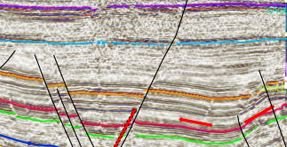
This advanced course develops participants’ skills in interpreting seismic data for structural geology applications. Covering fault interpretation, fold analysis, trap identification, and integration with well and geological data, the course enables professionals to build structurally sound subsurface models for exploration and development projects. Practical sessions will emphasize reducing uncertainties in structural mapping and risk assessment.
🎯 Learning Objectives
✅ Identify and map structural features on 2D and 3D seismic data
✅ Apply seismic attribute tools to enhance structural interpretation
✅ Integrate seismic with well and geological data for accurate models
✅ Interpret complex structural styles including thrusts, inversion, and salt tectonics
✅ Assess structural traps and evaluate exploration risks
👥 Who Should Attend
-
Geophysicists, seismic interpreters, and structural geologists
-
Exploration and development geologists
-
Reservoir engineers seeking better understanding of structure
-
Technical team leads and managers in E&P companies
🗂️ Training Format
✅ Hands-on interpretation on real seismic datasets
✅ Instructor-led lectures with real-world case studies
✅ Group exercises on fault and horizon mapping
✅ Seismic workstation demonstrations (if available)
✅ Daily recaps and Q&A sessions
📅 Detailed Daily Agenda with Time Breaks
📅 Day 1: Fundamentals of Structural Geology and Seismic Data
| Time | Topic |
|---|---|
| 08:30 – 09:00 | Registration, Introductions, Course Overview |
| 09:00 – 10:30 | Review of Structural Geology Principles |
| 10:30 – 10:45 | ☕ Coffee Break |
| 10:45 – 12:15 | Seismic Data Types and Acquisition Considerations |
| 12:15 – 13:15 | 🍽 Lunch |
| 13:15 – 14:45 | Seismic Resolution and Limitations in Structural Interpretation |
| 14:45 – 15:00 | ☕ Coffee Break |
| 15:00 – 16:30 | Introduction to Seismic Workstations and Interpretation Software |
📅 Day 2: Horizon and Fault Interpretation Techniques
| Time | Topic |
|---|---|
| 08:30 – 10:00 | Principles of Horizon Picking in Structurally Complex Areas |
| 10:00 – 10:15 | ☕ Coffee Break |
| 10:15 – 12:15 | Fault Recognition: Reflection Terminations and Indicators |
| 12:15 – 13:15 | 🍽 Lunch |
| 13:15 – 14:45 | Hands-On Exercise: Horizon and Fault Mapping on 2D/3D Data |
| 14:45 – 15:00 | ☕ Coffee Break |
| 15:00 – 16:30 | Validating Structural Interpretations with Well Data |
📅 Day 3: Advanced Structural Styles and Trap Analysis
| Time | Topic |
|---|---|
| 08:30 – 10:00 | Interpretation of Folds, Reverse Faults, and Inversions |
| 10:00 – 10:15 | ☕ Coffee Break |
| 10:15 – 12:15 | Salt Tectonics: Imaging and Interpretation Challenges |
| 12:15 – 13:15 | 🍽 Lunch |
| 13:15 – 14:45 | Structural Traps: Identification and Risk Assessment |
| 14:45 – 15:00 | ☕ Coffee Break |
| 15:00 – 16:30 | Hands-On Exercise: Structural Trap Mapping |
📅 Day 4: Seismic Attributes and Structural Interpretation Enhancement
| Time | Topic |
|---|---|
| 08:30 – 10:00 | Seismic Attributes for Fault and Fracture Detection |
| 10:00 – 10:15 | ☕ Coffee Break |
| 10:15 – 12:15 | Coherence, Curvature, and Spectral Decomposition Tools |
| 12:15 – 13:15 | 🍽 Lunch |
| 13:15 – 14:45 | Integrating Attributes into Structural Interpretation |
| 14:45 – 15:00 | ☕ Coffee Break |
| 15:00 – 16:30 | Group Exercise: Attribute-Based Structural Mapping |
📅 Day 5: Building Structural Frameworks and Uncertainty Analysis
| Time | Topic |
|---|---|
| 08:30 – 10:00 | Constructing Structural Frameworks for Geological Models |
| 10:00 – 10:15 | ☕ Coffee Break |
| 10:15 – 12:15 | Managing Uncertainties in Structural Interpretation |
| 12:15 – 13:15 | 🍽 Lunch |
| 13:15 – 14:45 | Final Exercise: Integrative Structural Interpretation Project |
| 14:45 – 15:00 | ☕ Coffee Break |
| 15:00 – 16:30 | Review, Discussion, and Certificate Ceremony |
📦 Materials Provided
✅ Course manual with key concepts and workflows
✅ Seismic datasets for exercises
✅ Templates for structural frameworks
✅ Certificate of Completion
Target audiences
- Reservoir Engineers, Geologists
You May Like

📘 Procurement and Supplier Relationship Management
🎯 Course Description: This course equips procurement professionals with the knowledge and skills to effectively manage supplier relationships and optimize procurement processes. Emphasizing strategic supplier collaboration, performance management, and value creation, the program helps organizations build resilient, mutually beneficial partnerships. …

📘 Managing Efficient Shutdown and Turnaround
🎯 Course Description: This practical 5-day course is designed to equip professionals with the knowledge and skills required to plan, execute, and close out shutdowns and turnarounds (STOs) in industrial plants efficiently. The course covers best practices in scope management, …
📘 Advanced Contract Drafting and Negotiation Skills
🎯 Course Description: This intensive 5-day program provides participants with advanced tools and techniques for drafting, reviewing, and negotiating contracts in complex, high-value projects. The course focuses on precision in drafting, clarity in language, minimizing ambiguities, and negotiation strategies that …

🌍 Roadmap to Achieve Sustainability: Building a Resilient and Responsible Energy Future
🔎 Course Description This intensive course empowers energy professionals to develop and implement actionable sustainability strategies. It covers global sustainability frameworks, decarbonization pathways, circular economy principles, ESG integration, and reporting practices tailored for oil, gas, and energy industries. Participants will …

🔄 Management of Change (MOC) & Pre-Startup Safety Review (PSSR) Training Course
📘 Course Description: This course provides in-depth training on the systematic control of changes to processes, equipment, people, and procedures through Management of Change (MOC) protocols, and how to verify safety before process startup using Pre-Startup Safety Review (PSSR). Participants …