
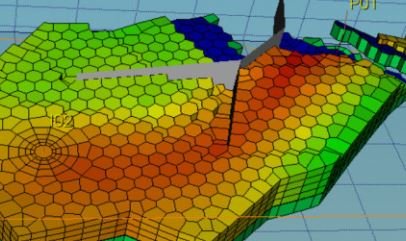
Fractured Carbonate Reservoir Characterization and Modelling: Unlocking Subsurface Complexity
Introduction
Fractured Carbonate Reservoir analysis &Modelling represent some of the most challenging yet promising hydrocarbon systems in the oil and gas industry. Their inherent heterogeneity, complex pore systems, and fracture networks demand advanced workflows and integrated approaches for accurate evaluation and development.
At RockFrontiers, we specialize in delivering cutting-edge training and consultancy services that empower geoscientists and engineers to master fractured carbonate reservoir characterization and modelling through integrated, data-driven methodologies.
Why Fractured Carbonate Reservoirs Are Complex
Unlike clastic systems, carbonate reservoirs exhibit:
- Dual porosity systems (matrix + fractures)
- Strong heterogeneity due to diagenesis
- Highly variable permeability pathways
- Complex fracture networks controlling flow behavior
These characteristics make reservoir prediction and modelling significantly more challenging, requiring specialized expertise and workflows.
Integrated Workflow for Fractured Carbonate Reservoir analysis &Modelling
A robust fractured carbonate reservoir study relies on the integration of multiple disciplines:
1. Geological Characterization
- Facies analysis and depositional environments
- Sequence stratigraphy and diagenetic overprints
- Structural interpretation and fracture systems
2. Petrophysical Evaluation
- Advanced log interpretation (porosity types, saturation)
- Core analysis and SCAL integration
- Rock typing and flow unit classification
3. Seismic Reservoir Characterization
- Seismic attributes and inversion techniques
- AVO analysis for lithology and fluid prediction
- Integration of seismic with well data
Modern workflows combine seismic, rock physics, and well logs to build a coherent subsurface model that supports development decisions.
Fracture Characterization: The Key to Success
Fractures often dominate fluid flow in carbonate reservoirs. Accurate modelling requires:
- Fracture detection from seismic attributes
- Image log interpretation (FMI, UBI)
- Discrete Fracture Network (DFN) modelling
- Geomechanical analysis to predict fracture behavior
Understanding fracture distribution is essential for optimizing well placement and maximizing recovery.
Static and Dynamic Reservoir Modelling
At RockFrontiers, our approach focuses on:
Static Modelling Fractured Carbonate Reservoir analysis &Modelling | RockFrontiers
- 3D facies and property modelling
- Porosity-permeability distribution
- Fracture modelling integration (DFN + dual porosity systems)
Dynamic Modelling
- History matching and production forecasting
- Simulation of fracture-dominated flow
- Uncertainty analysis and scenario testing
Integrated static and dynamic models enable better prediction of reservoir performance and improved field development planning.
Challenges in Fractured Carbonate Reservoirs
Key technical challenges include:
- Scale mismatch between seismic and well data
- Uncertainty in fracture connectivity
- Non-linear flow behavior
- Data scarcity in early exploration phases
Addressing these challenges requires advanced workflows, experienced professionals, and continuous training.
Why Choose RockFrontiers?
RockFrontiers is a globally recognized provider of training and consultancy in:
- Reservoir characterization and modelling
- Seismic interpretation and inversion
- Petrophysics and rock physics
- Carbonate reservoir evaluation
Our programs are designed to deliver practical, real-world insights using industry datasets, ensuring professionals gain hands-on expertise in solving complex reservoir problems.
Conclusion
Fractured carbonate reservoir characterization and modelling is a multidisciplinary challenge that requires integrating geology, geophysics, petrophysics, and engineering. With the right tools, workflows, and expertise, these complex reservoirs can be transformed into high-value assets.
Partner with RockFrontiers to gain the advanced skills needed to unlock the full potential of fractured carbonate systems and stay ahead in the evolving energy industry.
